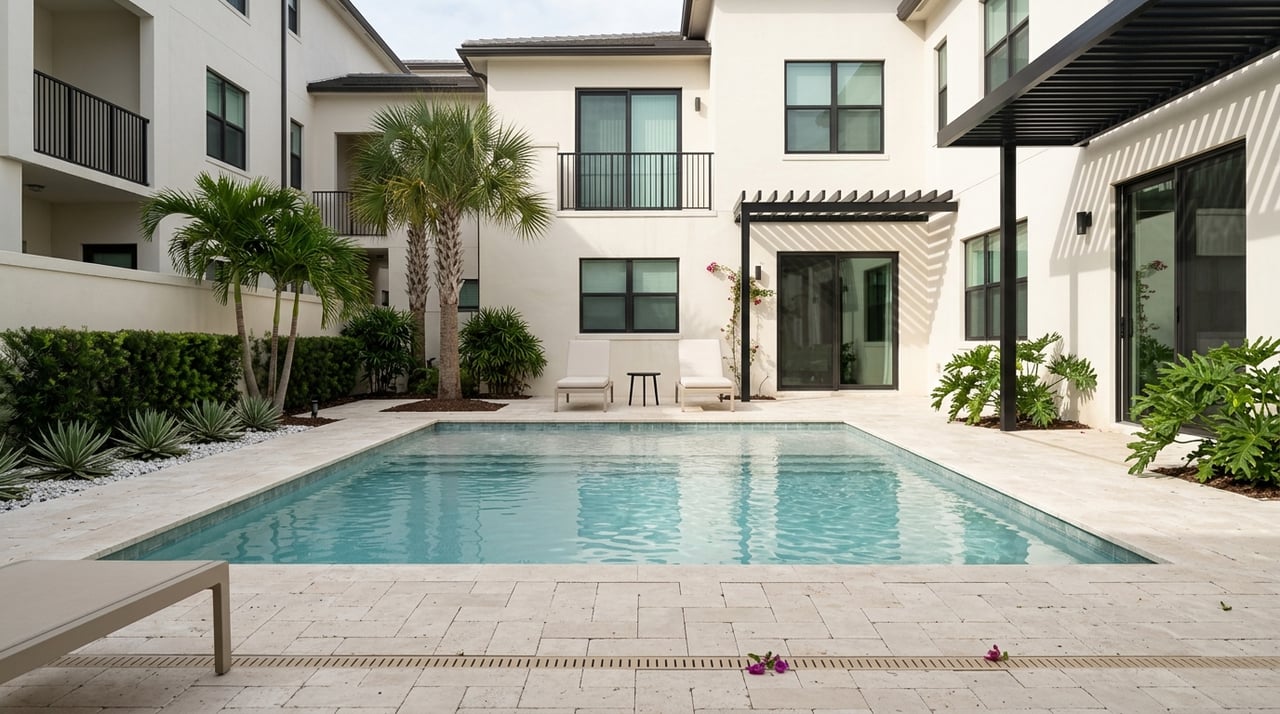
If you want a home in Tampa without taking on all the yard work and exterior upkeep, New Tampa is worth a close look. For many buyers, condo and townhome living here offers a practical middle ground between a detached house and a more compact, lock-and-leave lifestyle. Understanding how these communities work can help you choose with more confidence. Let’s dive in.
Why New Tampa Appeals to Low-Maintenance Buyers
New Tampa has a strong reputation for planned communities with shared amenities and an active neighborhood feel. City of Tampa information highlights features like private parks in Tampa Palms, the recreation complex in West Meadows, trails and sports amenities in Hunter’s Green, and clubhouse-centered living in Live Oak Preserve.
That matters if you want convenience without giving up access to outdoor space and recreation. In many cases, you are trading private yard maintenance for community amenities, shared upkeep, and a more streamlined routine.
New Tampa also draws buyers who want to stay connected to major destinations. Tampa Palms North notes that the area is less than five miles from USF, Moffitt Cancer Center, and the James A. Haley VA Center.
Condo Living in New Tampa
Condos in New Tampa often fit buyers who want a smaller footprint and fewer maintenance tasks. Active spring 2026 listing examples commonly show 2-bedroom, 2-bath layouts around 1,020 to 1,164 square feet, often with open-concept living areas, balconies, and updated kitchens and baths.
Some condo communities also package in a long list of shared amenities. Listing examples in Tampa Palms and Hunter’s Green show features such as pools, fitness centers, tennis, pickleball, racquetball, basketball, shaded walking paths, and in some cases gated entry.
That said, it helps to treat these as market snapshots rather than permanent averages. The exact size, finishes, and monthly fees can vary a lot from one community to another.
Townhome Living in New Tampa
Townhomes in New Tampa usually give you a little more room and a more house-like layout. Current listing examples are often 2 to 3 bedrooms, 2.5 baths, and roughly 1,185 to 1,455 square feet, typically across two stories.
Many townhomes also include features buyers want in everyday life, like a 1-car or 2-car garage, covered lanais, porches, pond-view outdoor space, split-bedroom layouts, or small private yards. For some buyers, that extra separation between living and sleeping areas feels more comfortable than a condo layout.
If you want low maintenance but still prefer the feel of a traditional home, a townhome can be the better fit. You may still have shared rules and fees, but you often gain more interior space and more private outdoor use.
Condo vs. Townhome in New Tampa
The better choice usually comes down to your routine, your budget, and how much shared responsibility you are comfortable with. In New Tampa, this comparison is less about labels and more about what each specific community includes.
| Feature | Condos | Townhomes |
|---|---|---|
| Typical layout | Often 2 bed, 2 bath | Often 2 to 3 bed, 2.5 bath |
| Example size range | About 1,020 to 1,164 sq ft | About 1,185 to 1,455 sq ft |
| Outdoor space | Often balcony or patio | Often porch, lanai, or small yard |
| Garage options | Varies, sometimes none or oversized single garage | Often 1-car or 2-car garage |
| Maintenance style | More shared building upkeep | Shared exterior upkeep, more home-like living |
If your goal is a simpler lifestyle with strong amenity access, a condo may check the box. If you want more room and a layout that feels closer to a single-family home, a townhome may be the better match.
What HOA Fees May Cover
One of the biggest decision points in New Tampa is not just the list price. It is the total monthly carrying cost.
In current listing examples, HOA dues often cover more than landscaping. Condo fees in communities like Faircrest and The Villas may include items such as structural maintenance, grounds maintenance, management, pool access, trash, sewer, cable TV, recreational facilities, private roads, and escrow reserves.
Townhome communities may also include meaningful long-term upkeep. In The Hammocks, for example, a listing notes that the HOA replaced the roof a few years ago.
This is why monthly dues should be viewed as a bundled cost, not just an amenity charge. In some communities, those dues are helping fund major repairs and shared capital items, not only day-to-day maintenance.
Why Rules Matter as Much as Fees
When you buy in a condo or townhome community, you are also buying into an association structure. New Tampa listings commonly note HOA approval requirements, deed restrictions, and rules that may affect pets, parking, rentals, and exterior changes.
That can be a good thing if you value consistency and shared standards. But it also means you should review association documents carefully before you commit.
A great floor plan will not solve a poor fit with the community rules. If you have a specific need, like extra parking, flexible rental options, or certain pet arrangements, it is smart to confirm those details early.
Florida Condo Law Adds Another Layer
For condo buyers in Florida, reserve planning and building inspections are now a much bigger part of the conversation. State law requires residential condominium associations to complete a structural integrity reserve study every 10 years for buildings that are three habitable stories or higher.
For associations existing on or before July 1, 2022, and controlled by unit owners, that study had to be completed by December 31, 2025, for qualifying buildings. Florida also requires milestone inspections for condo and cooperative buildings that are three stories or higher at age 30 and every 10 years after that.
The practical takeaway is simple. Older multi-story condos may carry more reserve pressure and greater exposure to special assessments than a typical townhome community.
Don’t Forget the CDD Assessment
In some New Tampa communities, your housing cost may include more than your mortgage and HOA dues. A Community Development District, or CDD, assessment can add another layer to the monthly picture.
The Tampa Palms Open Space & Transportation CDD states that it collects assessments for Tampa Palms III, Richmond Place, and West Meadows and helps maintain items like street lighting, ponds, pumps, and storm runoff systems. That means your true monthly cost may be HOA dues plus a CDD assessment.
This is one of the most important things to verify when comparing similar homes. A lower HOA fee does not always mean a lower total monthly obligation.
What Monthly Costs Can Look Like
Recent examples show why it is important to compare all-in costs instead of list prices alone. In New Tampa condo listings, one Faircrest unit showed a monthly association fee of $470, while examples in The Villas and Hunter’s Green listed $638 and $678 per month.
On the townhome side, The Hammocks showed $242 per month plus a $1,074 annual CDD, which works out to about $332 per month combined. A Live Oak Preserve townhome showed $350 per month plus an $820 annual CDD, or about $418 per month combined.
Tampa-wide, Redfin reported a median monthly HOA fee of $614 in the three months ending July 31, 2024, up 17.2% year over year. That increase was tied to insurance and maintenance pressure in Florida.
How to Choose the Right Fit
If you are deciding between a condo and a townhome in New Tampa, focus on the lifestyle you want day to day. The best match is usually the one that supports your routine, not just the one with the lower entry price.
Ask yourself a few practical questions:
- Do you want the smallest maintenance load possible?
- Would you prefer more living space or a garage?
- Are amenities like a pool, fitness center, or trails important to you?
- Are you comfortable with association rules and approval requirements?
- Have you compared HOA dues and any CDD assessment together?
- If considering a condo, have you reviewed reserves, inspections, and building age?
In New Tampa, the smartest comparison is community by community. The right choice often comes down to the association budget, what is included, the age and style of the buildings, and whether the monthly costs align with the lifestyle you want.
Whether you are relocating, buying your first place, or looking for a simpler ownership experience, a well-chosen condo or townhome can be a strong fit in New Tampa. If you want help comparing communities, monthly costs, and the tradeoffs between condo and townhome living, connect with Julie Kelsey.
FAQs
What makes condo and townhome living appealing in New Tampa?
- New Tampa offers planned communities with shared amenities, recreation spaces, and lower day-to-day exterior maintenance, which appeals to buyers who want convenience and an active neighborhood setting.
What are typical condo sizes in New Tampa?
- Active spring 2026 condo listing examples commonly show 2-bedroom, 2-bath units around 1,020 to 1,164 square feet, often with balconies and open-concept layouts.
What are typical townhome sizes in New Tampa?
- Current townhome listing examples are usually 2 to 3 bedrooms, 2.5 baths, and about 1,185 to 1,455 square feet, often with two-story layouts and garage space.
What do HOA fees often cover in New Tampa communities?
- Depending on the community, HOA fees may cover items like grounds maintenance, structural maintenance, management, pool access, trash, sewer, cable TV, private roads, and reserve funding.
What is a CDD assessment in New Tampa?
- A CDD assessment is an additional charge in some communities that helps fund infrastructure and area maintenance, such as street lighting, ponds, pumps, and stormwater systems.
Why should condo buyers in Florida review reserves and inspections?
- Florida law requires certain condo buildings that are three stories or higher to complete reserve studies and milestone inspections, which can affect long-term costs and the risk of special assessments.